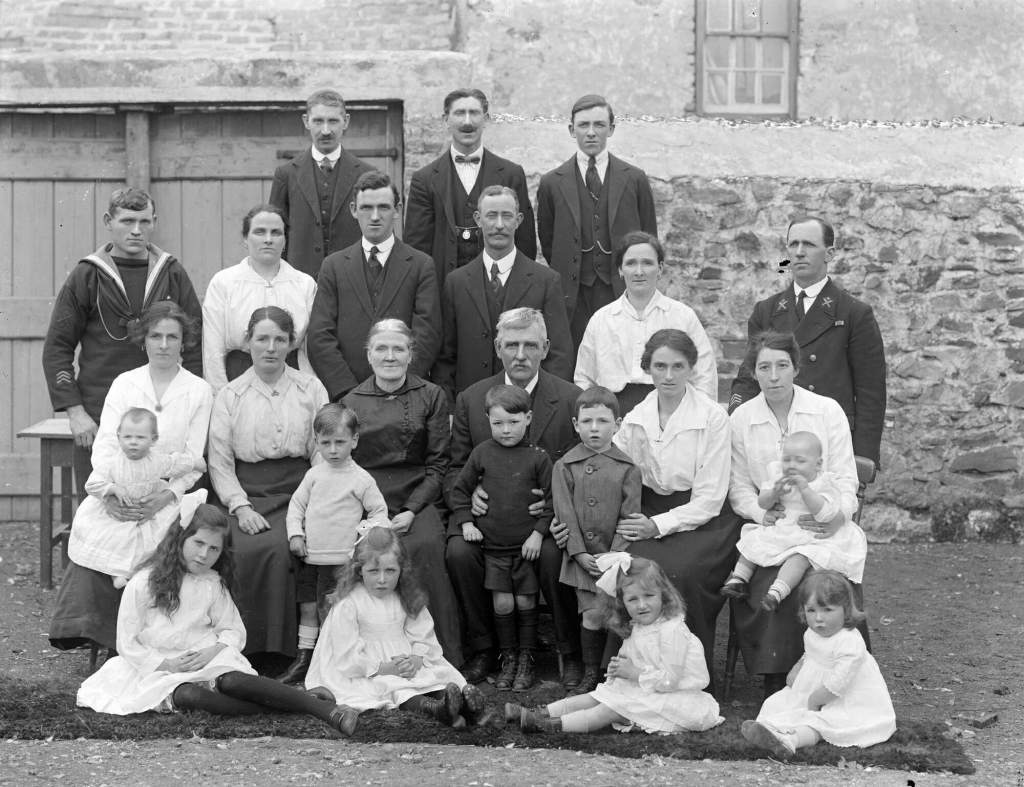
I didn’t set out to write a history lesson. But when you start pulling on the thread of where your people came from, you end up somewhere you never expected in my case, back in Ireland in the 4th century, standing next to a king.
His name was Niall. History remembers him as one of the most powerful kings Ireland ever had, and family lore remembers him for something a little more colorful: he was, by all accounts, the most fertile king in Irish history. He traveled his kingdom and left descendants behind wherever he went. Today, researchers estimate his bloodline runs through roughly 8.5% of the population in parts of the world touched by Irish migration millions of people- all tracing back to one man and his twelve sons.
Twelve sons. Fifteen hundred years of DNA. Names like Conn, O’Neil, Quinn, Devlin, McManus, and eventually, Man With Guns. My name.
Why This Matters More Than It Sounds Like It Should
I’ll be honest: when I first started digging into this, it felt like trivia. A neat fact to drop at dinner. But the more I sat with it, the more it started to explain things about my own family that I’d never had words for.
My dad never talked about religion. Never brought it up, never explained himself. But in his later years, I’d hear him in the next room talking to my mom about forgiveness, about things he’d done that he wanted to make right before his time came. I didn’t understand it then. I understand it a little better now, knowing that thread of old-world Catholic guilt and reckoning runs back through generations of men who came from the same place he did.
Family isn’t just the people sitting at your table. It’s the weight they’re carrying that got handed to them by people who died centuries before either of you were born.
The Famine That Almost Erased Us
Part of knowing where you come from means knowing what your people survived. Ireland in the 1800s was gutted by the potato famine; starvation swept the island, and desperate measures were taken just to keep the population from spiraling further out of control. Entire communities were nearly wiped out. It was the discovery of a hardier potato variety brought over from Idaho that finally turned things around and kept thousands from starving to death.
Read that twice. A single crop, moved from one side of the world to the other, is part of the reason any of us are here to talk about it at all.
What I Took From All This
I’m not a historian. I just like reading, and I like understanding why my family is the way it is, why we fight the way we fight, forgive the way we forgive, and carry the things we carry. Tracing it back to a king in Ireland doesn’t make any of it less complicated. But it does make it feel like part of something bigger than just us.
If you’ve ever wondered why you are the way you are, I’d tell you to start where I started: not with yourself, but with the people who came before you. You might be surprised who’s standing there.
This is one small piece of the story I tell in my memoir. Read the full book for the rest of the journey, from Ireland to Arkansas to right here in Indiana.