I signed up for the Army in January of 1974, at a recruiting station in Mishawaka, with a friend from the neighborhood standing next to me. I weighed 119 pounds. Fourteen weeks later I weighed 150. They feed you well when they’re planning to throw you out of airplanes.
Basic Training In The Dead Of Winter
Fort Leonard Wood, Missouri — January, February, March. Cold doesn’t begin to describe it. I was the smallest guy in the platoon, which meant during formation I got put on point, out front, setting the pace for a bunch of Texans carrying 25-pound packs up and down hills I didn’t know existed until I was walking up them.
They ran us through prisoner-of-war training in the middle of the night, forced us to crawl through frozen mud toward a barbed wire enclosure under floodlights, then made us lie on our backs with our arms and legs straight up in the air while they passed out C-ration cans of tuna and chicken for us to open with a P-38 can opener, dripping straight down onto our faces the whole time. I lost my watch somewhere in that mud. Never wore one again in my life.
Learning To Be Airborne
After basic, I went to Fort Polk, Louisiana, for eight weeks of infantry training: anti-tank weapons, hand grenades, laying trip-wire mines that would trigger if an enemy walked into them. The first time I ever fired a live weapon, I knocked every single target off its base in one pass. The instructor was not amused. Told me to sit back down. I thought it was the most fun I’d had in weeks.
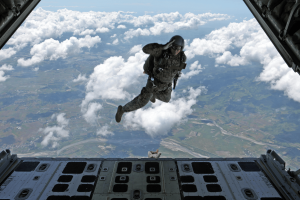
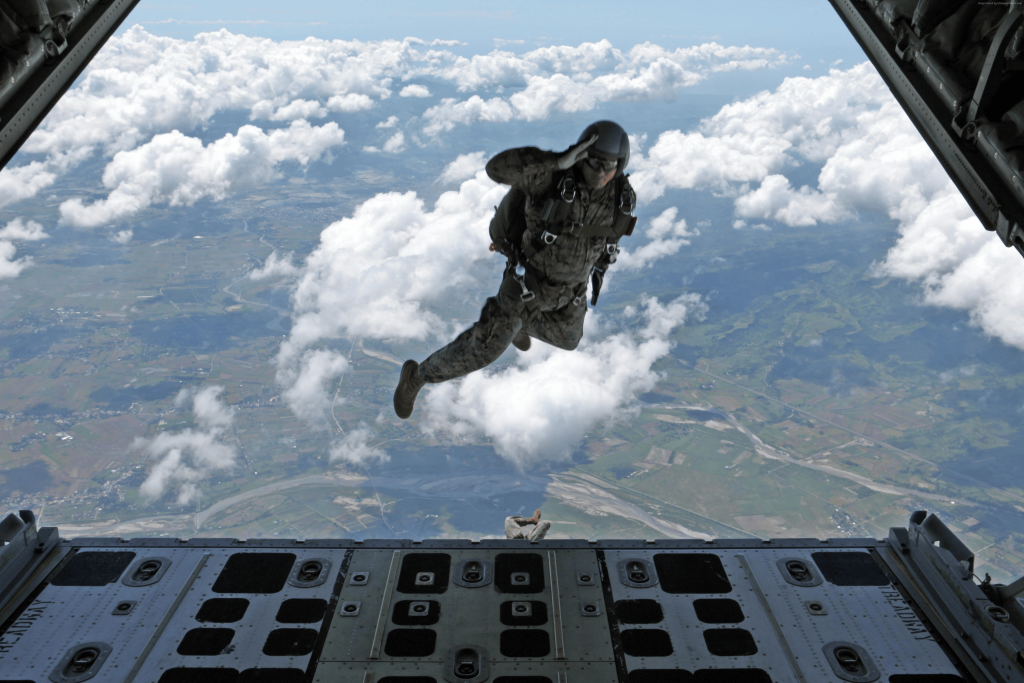
Then came three weeks at Fort Benning, Georgia, training to jump out of airplanes for a living. Ground week. Tower week, where they drop you 250 feet on a harness, and you’d better land and roll, or you’re doing pushups. Then the real thing: the airplane door, open sky, and you go.
I almost didn’t qualify. I’m colorblind — red and green, and the jump lights on the aircraft are red and green. Turned out the two lights were spaced far enough apart that I could tell them apart by position even if I couldn’t tell them apart by color. Small mercy. I ended up being first out the door nearly every jump.
Rules You Don’t Break
There’s one rule every paratrooper learns fast: never land standing up. You land and you roll, every time, no exceptions, partly for your body, partly because a soldier standing still is an easy target. I went on to complete 335 jumps over the course of my service, including night jumps over Panama, where the only thing guiding us down in the dark was a birthday candle lit on the ground below.
What It Left Me With
I don’t wear a watch. I still remember exactly how mud smells when you’re crawling through it at two in the morning with someone yelling at you to move faster. And I learned, at nineteen years old, what it feels like to be handed real responsibility and rise to it something that stuck with me long after I hung up the uniform.
Most people who meet me now, retired, gardening, fixing up houses in a small Indiana town, would never guess I spent years jumping out of airplanes for a living. But that’s the thing about a life: you carry every version of yourself forward, whether anyone else can see it or not.
My memoir covers this chapter and everything that came before and after it, from a childhood in Mishawaka to the Army to the life I’ve built since. Pick up a copy to read the rest.