I’ve walked into more churches than I can count. Different denominations, different towns, different decades of my life, always looking for the same thing, and rarely finding it explained the same way twice.
Where It Started
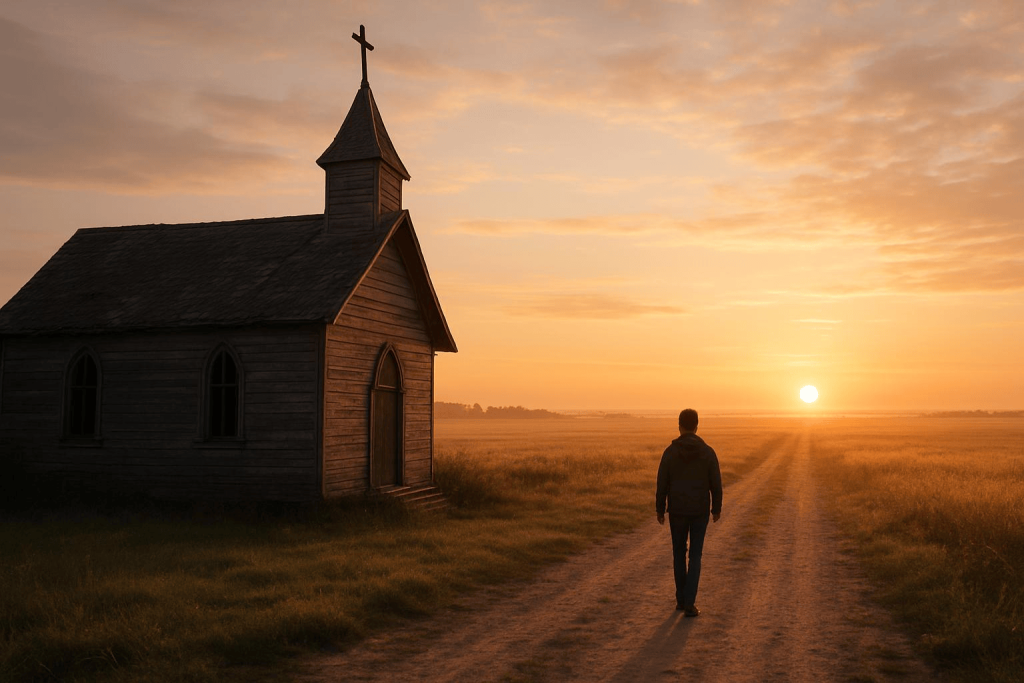
Growing up in Mishawaka, I walked past two church steeples every single day on my way to and from school: one Catholic, one Christian, less than half a mile apart, on opposite sides of the railroad tracks. Different immigrant communities had built them decades apart: one built by families from England, Ireland, and Scotland; the other by families from Belgium. Same town, same general belief, two completely different institutions that might as well have existed on separate planets.
That contradiction stuck with me. If God is God, why does the building and the community around it make so much difference in how the message comes out?
Thirty-Seven Years Of Paying Attention
So I started paying attention. Every church I visited after that, I was listening for the same thing: was the message here actually what’s written in the Bible, or was it something else wearing the Bible’s name? I found, more often than I expected, that it was the latter: sermons shaped more by the preacher’s personality or the congregation’s comfort than by the text itself.
I never once watched church on television. In my opinion, that’s the worst version of all: a performance dressed up as worship. Even during my years in the Army, wherever I was stationed, finding a church came before almost everything else on my list.
What Faith Looks Like From The Outside In
Along the way, I did something most people wouldn’t think to do: I wrote to two men on death row in California. Different men, completely different relationships with faith. One preached to other inmates and could barely get through a letter to me without bringing God into nearly every sentence. The other didn’t care at all. I’ve thought a lot about why people so often turn to God only once they’ve run out of every other option, and I’ve come to believe faith works better lived forward than reached for backward, after the damage is already done.
I also spent time in Brazil, touring churches built centuries ago by men who promised to build something in God’s name in exchange for surviving a storm at sea. One of them, a church coated in nine thousand pounds of gold, still stands, though nobody’s allowed inside anymore. Meanwhile, outside those same walls, I watched people picking food out of the trash with no food bank in sight. That contradiction is the same one I noticed as a kid walking past those two steeples: the space between what a religion says it stands for and what it actually does for the people around it.
Where The Search Led
That thirty-seven-year search eventually turned into two books I wrote and self-published: Looking For God and The Abyss of Looking For Religion, both built from decades of research into where people go looking for answers and what they find when they get there. I’m now working on a third.
I won’t tell you I’ve found a tidy conclusion, because I haven’t, and I’m suspicious of anyone who claims they have. What I’ve found instead is a habit of paying close attention, of asking the uncomfortable question when something doesn’t add up, and of believing that how a person lives says more about their faith than what they say on a Sunday morning.
This search and where it’s taken me is woven through my memoir alongside the rest of my life story. If questions of faith and searching resonate with you, I hope you’ll pick up a copy.